
 |
Biography |
I am happy that you are using this web site and hope that you found it useful. Unfortunately, the cost of making this material freely available is increasing, so if you have found the site useful and would like to contribute towards its continuation, I would greatly appreciate it. Click the button to go to Paypal and make a donation.
This article was written by George Fisher Russell Barker and was published in 1885
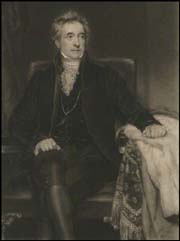 Sir John Bernard Bosanquet, judge, was the youngest son of Samuel Bosanquet of Forest House, Waltham Forest, and Dingestow Court, Monmouthshire, governor of the Bank of England 1792, by his wife Eleanor, daughter of Henry Lannoy Hunter of Beechill, Berkshire.
Owing to family influence his career at the bar was soon successful, and he was appointed standing counsel to the East India Company (1814) and to the Bank of England (1819). On 22 November 1814 he was made a serjeant-at-law, and from that time came prominently before the public in the numerous bank prosecutions which he conducted with great discretion for thirteen years. In 1824 he declined the appointment of chief justice of Bengal, and in Easter term 1827 was made king's serjeant. On 16 May 1828 he was nominated one of the commissioners appointed to inquire into the practice of the common law courts. Over this commission he presided for three years.
Upon the retirement of Sir James Burrough he was made a judge of the court of common pleas 1 February 1830, and was knighted on the following day. On 4 September 1833 he was sworn a member of the privy council, and thenceforth, until 1840, constantly formed one of the judicial committee of that body. Upon the resignation of Lord-chancellor Lyndhurst, Bosanquet, in conjunction with Sir Charles Pepys, the master of the rolls, and Sir Lancelot Shadwell, the vice-chancellor, was appointed a lord commissioner of the great seal. This commission lasted from 23 April 1835 to 16 January 1836, when Pepys was made lord chancellor.
After eleven years of judicial work he was compelled by his state of health to retire from the bench shortly before the beginning of Hilary term 1842. He died at the Firs, Hampstead Heath, on 25 September 1847, aged 74, and was buried at Llantillio-Crossenny, Monmouthshire. A monument is erected to his memory in his parish church of Dingestow, and his portrait hangs in the hall of Eton College.
He was a man of considerable learning, with a great taste for scientific inquiries. It is stated in Foss that he published anonymously a ‘Letter of a Layman,’ in which he showed the connection between the prophecies of Daniel and the Apocalypse. As a judge he was remarkable for his ability and impartiality.
He married in 1804 Mary Anne, the eldest daughter of Richard Lewis of Llantillio-Crossenny, by whom he had an only son, who predeceased him.
| Meet the web creator | These materials may be freely used for
non-commercial purposes in accordance with applicable statutory allowances
and distribution to students. |
Last modified
12 January, 2016
|