
 |
The Peel Web |
I am happy that you are using this web site and hope that you found it useful. Unfortunately, the cost of making this material freely available is increasing, so if you have found the site useful and would like to contribute towards its continuation, I would greatly appreciate it. Click the button to go to Paypal and make a donation.
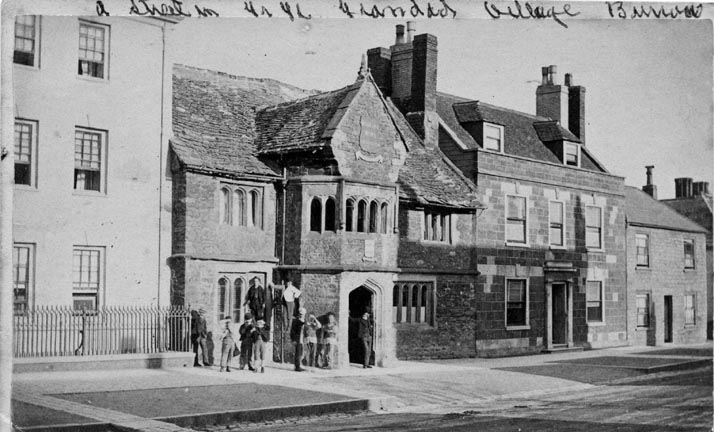
I received these photos from a gentleman called Steve who is investigating his family history. His ancestor "GG Grandad Burrows" apparently came from the area where these photos were taken.
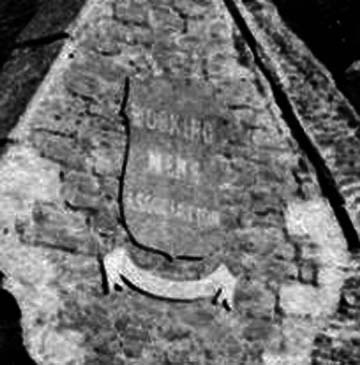
This building - now Bridport Museum - bears a plaque (see right) which reads "Working Men's Association". Clearly the building is late mediaeval and has survived what I presume is "development" around it. There is what looks like a Georgian house to the left. I wonder if this building has anything to do with the Working Men's Associations of the 1830s.
The Museum web site states
The fine façade, from the 16th century, is all that remains of the original building that now houses Bridport Museum, in South Street. In 1931 Captain Alfred Codd purchased the building, "The Old Castle", and donated it to the town to be used as a museum and art gallery. Originally Codd bought it for £1,800.00 to house his own, large art collection.
The building is made from hammer dressed stone, with ashlar dressings. It has a two storey porch block with 4-centred arch on ground floor, leading to ledged door. There was a fire in the building in 1876 after which the building was heavily restored. Its origins are a mystery, but it may have been the home of a chantry priest.
For many generations it was known as “The Castle” which may have derived from its proximity to the area known from early documents as Castleyhay, or ‘place of castle’. Alternatively, there may actually have been some kind of fortified building originally on the site. The northern boundary of Anglo Saxon and early Medieval Bridport lies a few feet north of the building and it is likely that a stronghold building would have stood at the entrance to the town. In 1876 two thatched cottages at the rear caught fire and the building was severely gutted with loss of all internal Tudor features.
| Meet the web creator | These materials may be freely used for
non-commercial purposes in accordance with applicable statutory allowances
and distribution to students. |
Last modified
4 March, 2016
|